Showing posts sorted by relevance for query william gibson. Sort by date Show all posts

Monday, March 2, 2020

The Legend: Part 1


There's an unexpected optical illusion when you see the cover of William Gibson's new novel Agency from a distance.

Held in your hands, the book looks normal, but the combination of the sharp text and the blurred face just looks wrong from 40 or 50 feet away - the distance between me and the stage at the Stanley Industrial Alliance Theatre, where Gibson is about to discuss Agency, his latest novel, with Marsha Lederman, the Western Arts Correspondent for The Globe and Mail.

I repeatedly adjust my glasses in an attempt to bring the cover photo into focus, until I finally realize what the problem is and force myself to stop.

To the audience's amusement, Marsha Lederman starts her introduction by saying, "I'm so excited!".  This is a common thread: there's a strong feeling of "we're not worthy" when people talk about William Gibson.* 

She provides us with a brief overview of his life and career, concludes her introduction by saying, "Tonight we are in the presence of a legend," and William Gibson ambles up to the microphone.

As legends go, Bill has aged well. In her intro, Ms. Lederman mentions that he was born in South Carolina in 1948, which seems wrong, somehow - in my mind, William Gibson will always be the tousle-haired alt-rock dissident in Harry Potter glasses who spawned the cyberpunk genre in 1984 with the publication of Neuromancer, his breakout novel.

Nonetheless, there he is at the age of 72: the tousled hair has receded and been cut short, his posture is stooped and his pace a bit slower, but the signature round glasses remain, along with the unique view of the world that makes his writing so distinctive.

Agency, his 14th novel, is the sequel to his 2014 novel The Peripheral, in which Flynne, a woman living in a near-future version of the United States, discovers that rather than working in a virtual environment, she and her brother Burton have been operating remote devices - peripherals - in the future.

The future to which they’ve become connected is a hundred years later than their own, a world in which a series of cataclysmic events ironically referred to as the Jackpot have eliminated 80% of the population.

Agency continues to explore alternate timelines – referred to as stubs - and maintain dual storylines in the near and far future. It's set in an alternate universe (which is aware that there are alternate universes) in which Hillary Clinton won the 2017 election and the United Kingdom voted against Brexit.

Gibson does a brief reading from Agency, mentioning that he was adding them up on his way to the theatre, and that this would be the 15th and final reading from the Agency launch tour, a prospect which he seems to greet with some relief.  He explains that the reading is set in what London has become about a hundred years in the future and that the characters are discussing an alternate "stub" timeline that forks away from their history - which is our future. It occurs to me that this is the most explanation that I've ever received for a Gibson storyline, even while reading one.

In the conversation he reads, one of the characters comments, "They're still a bit in advance of the pandemics, at least," which gets an appreciative if slightly nervous laugh from the audience.


After the reading, Gibson joins Lederman at a pair of centre stage seats, and she starts the conversations by asking if Agency is written as a warning.  Gibson considers this, and says no, but explains that when he began writing The Peripheral, he didn't realize how staggering the Jackpot would be, and that it floored him when Wilf, one of the characters from future London, described the full extent of the Jackpot, because he had never seen it all at once.

Lederman questions this: "You make Wilf sound like he's separate from you!"

In response, Gibson explains that before he began writing fiction as an undergrad, he read Aspects of the Novel  - he blanks on the author's name, although he's convinced it will come to him later. 
"It said that a novelist wasn't fully doing their job as long as the characters weren't entirely in control. That impressed me.
When I started to write - try to write - I discovered that the only way I could do it was to get to a point where I was sort of watching the characters doing what they were doing and listening to them saying what they were saying and taking it down, with very little sense of where it's going. That's where that comes from.
"I don't think I could do it in any other way. For one thing, if I knew how it was going to end, I'd be so bored."
Lederman discusses the dichotomy between the technological changes after the Jackpot and the changed, emptied world that it left behind, asking if this reflects his view of technology, "this bifurcated experience that makes life easier but creates destruction?"
"It's become apparent to me since I've been working with sort of material** is that often the most powerful changes driven by new technology are unanticipated consequences as far as the inventors and developers of the technology, and people who embrace it, they have no idea.

I can almost remember the world before completely ubiquitous plastics. In my earliest baby pictures, the toys I'm playing with are for the most part wood and metal.

So I can remember my mother showing me a letter opener that the Fuller Brush Man*** had given her when he’d come to the door. It was shaped like a Fuller Brush man, so it was kind of a ... trippy thing. And she said, 'Look at this, it's made of plastic.' it was really novel, it was this lightweight, slightly flexible, slightly fragile material and that was why he had given it to her, to capture her imagination, because it was plastic.
No one imagined at that point that tiny fragments of the Fuller Brush Man literally would be killing shoals of coral. Even today, like all of that stuff wound up in the ocean.
It took about five years for everything I was playing with to be made out of injection moulded plastic, for the most part, and another five years for them to invent plastic bags. And no one looked at plastic bags and expected the deaths of uncounted species.”
When asked about the problems caused him by the election of Donald Trump, he speaks ruefully regarding the demise of the book that he was originally working on when Trump won the presidency, a book set in California in the near future, where Hillary Clinton is president of the United States.
"It was going slow in part because I was watching the buildup to the US presidential election out of the corner of my eye.
And when Trump descended the escalator to announce his candidacy my simulation node or whatever it is sort of went "ENNNHHH!"**** But the editor that’s attached to it said, “Forget it, that’s ridiculous. That’s not going to happen.” So I thought, okay, and I went back to work.
But then the UK voted YES on Brexit, and when I saw that I thought ‘Whoa, if the United Kingdom can vote for something that STUPID and that self-destructive, the United States might be able to elect Trump.’ But then I thought, ‘No…’
So when I woke up after November 16th and looked at the laptop where my manuscript was, I thought, ‘Well that's dead.’
So on top of everything else I had to be unhappy with, I was unhappy that my book seemed to have been ruined.”
Trump's election left Gibson with a feeling of "complete unreality."  But this feeling allowed him to immediately take the world he’d been creating and use it as one of the stubs from The Peripheral, and after writing some short pieces to test the idea, found that it worked as a concept and took that as a starting point for Agency.

Lederman comments on how unrealistic the present situation would seem to someone from 2013, and Gibson relates having a luncheon in London during the Agency book tour at which he and a group of fellow writers had “a mutual grumble and sigh of exasperation: what do they expect us to do with this material??”
“It made me realize that part of whatever it is that I do** is I sort of measure what Wilf in the book calls ‘the Fuckedness Quotient’ of the world.
I measure that, then I work out ways to increase it slightly to induce the level of cognitive dissonance that I think would be part of my pleasure in the text that I was writing.
Doing that in this world is incredibly difficult because - okay, I've got it set here, and you wake up the next day, and the FQ is up HERE."
After discussing the influence of current events and internet sources such as Google and Twitter on his work, Lederman  points out that Gibson has "been pretty famously influenced by music, and music has been pretty famously influenced by you."

Apparently Gibson doesn’t feel that Billy Idol’s 1993 Cyberpunk album is the best example of this type of cross-polination, but he acknowledges that Flynne’s half of The Peripheral owes a large debt to a band called Drive By Truckers, which put Gibson back in touch with his small town South Carolina and Virginia origins.

When asked if it’s "kind of a thrill" to have music like Zooropa by U2 or Idoru by Grimes that is in part was inspired by his writing, his response is “It...varies.”

He mentions having a huge cardboard box of cassettes in his basement that he’s been sent over the decades by people who aren't famous: " 'Here, I based this on your work.' That’s kind of more fun in a way than the big guys."

(In an attempt to keep this readable, I've split this posting into two - the second half can be read here.)

- Sid

* I attended a reading by a trio of authors at Toronto's Harbourfront back in the 90s where Nancy Baker, who was reading first, started with with "I realize you're all really here for William Gibson."

** Gibson is oddly reluctant to describe himself as a science fiction writer. His responses are peppered with this sort of euphemism.

*** The Fuller Brush Company used to do door-to-door sales in the United States. This is before my time as well, just for the record.

**** Full disclosure, I struggled with this sound. I illicitly recorded the talk – don’t worry, Vancouver Writer’s Fest, I have no plans to release a William Gibson bootleg album – so I was able to play the sound for my wife Karli. We agreed that it wasn’t indifference, it wasn’t panic, it was more sort of a slightly surprised sound with just a soupçon of distaste. I leave it to the reader to decide whether or not more E’s, N’s or H’s would have better conveyed that intonation.

Thursday, February 26, 2026

Bruce Sterling would be a good alternative.

I generally begin my day with a strong mug of Tetley's tea and a browse through Apple News, a habit that I've had for long enough that Apple News is quite aware of my interests, and as such my feed contains a specific Science Fiction section.

This morning's feed featured a link to a Screenrant article by Tom Russell regarding cyberpunk's lack of mainstream presence, and how the upcoming AppleTV adaptation of Neuromancer, William Gibson's 1984 SF masterpiece, has the opportunity to change that.  The article was blessed with the lengthy headline "Apple's Cyberpunk Series Based On The Greatest American Sci-Fi Novel Is Coming At Just The Right Time.

The greatest what now?

Although William Gibson was born in the United States, he has been living in Canada since 1972*, and, as far as I can tell, his entire body of work was written here.  It appears that he does maintain dual US-Canadian citizenship, but I'm certain that he's living his best life someplace just west of me in the Point Grey neighbourhood of Vancouver**, and has been for quite some time.  Good grief, I've all but bumped into the man walking along Broadway West near Macdonald Street!

So, I'm sorry, Mr. Russell, but no.  I can't imagine him doing the Joe speech, but as far as we're concerned, William Gibson is Canadian - please pick one of your own cyberpunk authors for future articles. 

- Sid

* According to Wikipedia, he first moved to Canada in 1967, but returned to the US temporarily to complete his high school diploma when he was 21.

** I quote from a 2014 GQ interview with Gibson by Zach Baron:

William Gibson lives in an overwhelmingly green suburb with old-money roots south of Vancouver’s downtown, and it is in this suburb that I am currently wandering, looking for William Gibson. 

Sounds like Point Grey to me.    

Saturday, October 25, 2014

De Castell, Dellamonica and Gibson


What’s the difference between fantasy and science fiction? Fantasy can’t happen. Science fiction is something that hasn’t happened, but could.
Probables and Impossibles, 2014 Vancouver Writers Fest
Today I ventured out into the autumn rain to attend a Vancouver Writers Fest event featuring veteran science fiction author William Gibson, and newcomer fantasy authors Sebastien de Castell and A. M. Dellamonica, reading from recent work and discussing topics ranging from world building to the dark trends in contemporary fantasy. 


To be honest, I was there for William Gibson - I've been a fan since reading Neuromancer, his first book, back in 1984, and I have an enormous respect for the unique perspective and superb style that informs his work.  However, I was very impressed by both de Castell and Dellamonica, and found the event to be well rounded and entertaining.

Dellamonica described the process of laying the foundations of her third book, Child of a Hidden Sea, as deciding that she wanted to write something "fun", and proceeding to make a list of things that she thought qualified, like portal fantasy, biodiversity, "pirates!", sword fights, David Attenborough, sailing ships and so on, and finally deciding not to discard any of the ideas and to "write about all of them!"

She defines portal fantasy as "Narnia for grownups - the idea is to go through a wardrobe or you're picked up by a tornado, something that transports you to another world but you're originally from here," and discussed how the origin of characters in our world places their story in the time it's being written, with The Lion, The Witch and the Wardrobe ultimately being about England during World War II, and the impossibility of thinking about Oz without thinking about the Dust Bowl.

In some ways, Gibson was the odd man out on the panel when it came to the discussion of worldbuilding.  As he pointed out, his writing rarely involves the construction of a fully-featured environment: "I start with a character and ... small objects, and the nature of the character and the nature of the small objects expand into an assumed world. I think ... that part of my technique has always been to rely on suggestion." 


He described an encounter early in his career with role playing game developers who were eager to transfer the cyberpunk reality from Neuromancer into a pen and paper game. One of their first questions was, "where does the food come from", part of a list of similar "Marxist" questions that Gibson was unable to answer. Ultimately, the developers gave up, deciding that Gibson's world was "not gameable".

De Castell describes Traitor's Blade, his debut novel, as "The Three Musketeers meets Game of Thrones".  Like Gibson, he also writes from a character-centric position - in Traitor's Blade, he began with the question: "What happens when the ideals that you've believed in for your entire life turn out to not* work?" and created an honourable, heroic character who lives in a corrupt, collapsing society. From that starting point, he "builds the world out based on explanations and questions," explaining that one of the most useful qualities that you can give your narrator is ignorance.

He feels that within a richly textured narrative, the props acquire a deeper level of significance beyond their physical attributes - what it means to a character to use a laser rifle versus a light saber, for example.

One of the topics that came up in the Q and A portion of the event dealt with the question of adaptation, which might well have been a red button topic with William Gibson, given the indifferent response to the film versions of his work and the fact that Neuromancer, his best known novel, has been in development limbo for the last 30 years.** 

However, Gibson handled the question gracefully, and it was amusing to watch the way the other two authors deferred to him because they hadn't been exposed to that particular situation at this point in their careers, whereas he was a seasoned veteran regarding the entire process.

The original question about adaptation mentioned games as well as movies and television.  Ignoring the issues of food production in cyberpunk fiction, I suspect that Neuromancer would probably adapt quite well to the current novelistic, story-driven computer gaming milieu.  Maybe it's time to revisit that idea, Bill.
- Sid
* The split infinitive is Mr. de Castell's, not mine.

** To my surprise, I recently found out that Johnny Mnemonic was not the only Gibson movie out there - his short story New Rose Hotel was also adapted to film in 1999.
 

Tuesday, July 1, 2025

Neuromancer.

The sky above the port was the color of television, tuned to a dead channel.

“It’s not like I’m using,” Case heard someone say, as he shouldered his way through the crowd around the door of the Chat. “It’s like my body’s developed this massive drug deficiency.” It was a Sprawl voice and a Sprawl joke. The Chatsubo was a bar for professional expatriates; you could drink there for a week and never hear two words in Japanese.

William Gibson, Neuromancer 

If you know, you know.

For existing fans of Neuromancer, William Gibson's groundbreaking 1984 cyberpunk masterpiece, seeing the glowing neon title at the end of the Apple TV production announcement was redundant - all we needed to see was the word "Chatsubo" and we knew what was happening. 

In some ways, Neuromancer is the Holy Grail of science fiction adaptation, a quest which may well end badly for the participants.  Paradoxically, the great challenge in adapting Gibson is that he's such a good writer, which make it's almost impossible to capture his distinctively sparse, laconic style* in another medium.

There have been several attempts to adapt Gibson to the big (and little) screen. 1998's New Rose Hotel, based on Gibson's 1984 short story of the same title, stars the epic combination of Christopher Walken and Willen Dafoe as a pair of freelance corporate extraction experts hoping that they've found the big score that will set them up for life.

It's perhaps not a great film, but it far more effectively captures the moody neo-noir feeling of Gibson's writing than 1995's flawed Johnny Mnemonic.  Originally planned as a low-budget art film version of the original short story, the eventual studio release failed to match the quality of its source material on a number of different levels.

Amazon's episodic version of The Peripheral is a loose adaptation of the 2014 time travel-alternative reality novel, but does an acceptable job of visualizing the near and far future versions of the world that Gibson describes in the book.  The casting of Chloë Grace Moretz as Flynn Fisher was a particularly good choice, and it's unfortunate that the series didn't receive a second season that might have allowed it to further develop its characters and storyline. 

And now, Neuromancer prepares to take its place in the gauntlet. The casting looks good - I'm okay with Callum Turner as Case the hacker, and Dane DeHaan is an interesting choice for the psychopathic Peter Riviera - but ultimately, it's going to come down to look and feel.  If it doesn't have the right flavour, the right style, it's not going to work.

As per Apple's teaser, the series is in production now, and it's expected not to be released until sometime in 2026 at the earliest.  On behalf of the book's extensive fan base, good luck. And, to quote Ru Paul: "DON'T fuck it up." 

- Sid

* if you ever have the opportunity to hear Gibson read from his work, I strongly advise that you do so.  All other reasons aside, it means that going forward, you can quite clearly hear his voice when you read his work.

Friday, January 27, 2012

"My father's car was science fiction."


Yesterday I attended an entertaining and illuminating evening with science fiction author William Gibson, arranged by the Vancouver Public Library as part of Gibson's promotional tour for his new collection of non-fiction work, Distrust That Particular Flavor.  Gibson's articles and commentaries are a fascinating present-day application of the same brilliant methodology and unique style that he more often uses to create the future.

The event was standing room only, or would have been if the organizers hadn't started setting up more chairs.  I had the good fortune to be Number 24 through the door*, which continues to support my philosophy that if you show up early, you get good seats.

The demographic was an interesting mix that ranged from twenty-year-olds to people who looked to have a decade or two over and above my fifty, suggesting that Gibson's popularity as a writer has maintained itself well over the intervening years since the 1984 publication of his landmark cyberpunk novel Neuromancer

Gibson is a little more lined, a little more lean, and what used to be almost trademark unruly mid-length hair has changed to a receding crewcut, but the round wire-framed glasses remain the same as in the pictures of Gibson from the 80s.  He retains a kind of laconic southern drawl from his youth in Virginia which combines well with his flat delivery, although that deadpan sense of humour can make it hard to realize that he's made a joke.

Over the course of the evening, Gibson covered a wide range of topics.  He discussed his early interest in science fiction as almost a given for someone growing up in the United States in the 50s, when everything had a sort of post-war futurism in its design. To illustrate, he pointed out that:
My father's car was science fiction. It was far-out science fiction, it had rocket fins and chrome plates on it.
He went on to discuss the question of science fiction as a predictive medium as he approaches it in his work:
People can and do attempt to predict the future in works of science fiction. Someone like Arthur C. Clarke does today look rather prescient - unusually so by the standards of science fiction. When I began to write science fiction, I convinced myself through my own reading of science fiction and whatever cursory study of comparative  literary critical methodology I was able to apply, it seemed to me that the science fiction fiction of the past could most meaningfully be read as a product of the moment in which it was created. 
When I was a kid, there was a lot of 1940s science fiction around, which I was reading in the late 50's and early 60's, and I actually had to reverse engineer the history of the world as i read it in order to figure out why some things were so wrong.  Because when you finish writing a piece of fiction imagining the future, when you dot the last "i" and put the last period on it, it begins to obsolesce - it begins to acquire a patina of quaintness which ultimately will probably be its greatest charm for readers of the future, in the way that when we read 19th century science fiction today, what we find charming is what they got wrong.  So that always happens.  Nothing dates more quickly than an imagined future.

I tried...knowing that I did my best, when I was starting to write, to try to produce work that would resist that and have some longevity, simply because that was more of a challenge. So I was careful never to have year dates in my early work. 

In fact what happens is that even though people do read it, it's all still in print, people do read that stuff, when they read it now, they think, okay, I know that the central mystery of this book is going to be what happened to all the cell phones.  You may be able to anticipate or at least name cyberspace, but it doesn't mean you can anticipate the advent of ubiquitous cellular telephony, and indeed if anyone had been able to anticipate that in a SF novel of the early 1980s,  what a weird book that would have been!  Imagine a world in which no one is ever truly alone. 
Gibson is resigned to the inevitability of piracy in the digital age.  When asked about his position regarding this problem during the question and answer period, he replied with the following philosophical position:
Everything I've ever written is available as a single BitTorrent download that you can find on hundreds of sites around the world...if that weren't true, you'd have to consider me a failure.
All in all, a good evening.  And it was free, which is an awfully good recommendation for something like this.  

I declined the opportunity to stand in line and obtain Gibson's signature on a newly purchased copy of Distrust That Particular Flavor, although, when you think about it, that's going to be one of the most difficult things to adapt to e-books - and a pretty good justification for not downloading the pirate version of Gibson's collected works. 

- Sid

*  No, my OCD hasn't reached the point where I've started counting people in front of me in event lineups, the organizers were good enough to provide me with a non-winning door prize ticket.

Thursday, February 28, 2019

Updates.

"Sergeant Storm, Major Matt Mason's Space Friend!"


Over time, I've kept a casual eye on opportunities to add to my little collection of Major Matt Mason toys from the 60s, but generally the options on eBay are either a bit more than I want to spend, or not in very good condition.

However, it would seem that perseverance is its own reward.  I had the misfortune of waking up early on Wednesday morning, and as a result had some extra time before getting ready for work.  So I checked on a Matt Mason figure that I'd been following on eBay, only to discover that it had been purchased by someone else.  However, it recommended another auction:  a Sergeant Storm figure in relatively good condition at only $49.00 for the Buy It Now option - a very reasonable price compared to similar listings. Not only that, but the seller would only ship within Canada, which sounded to me like a clear message. A few quick clicks and voila, a new addition to my toy collection.

The slightly damaged 1966 "blue strap" figure comes with a slightly damaged flight propulsion pack - interestingly, the damage on the pack matches the damage to the paint on the back of the figure. It turns out that if you leave a painted rubber action figure in contact with a polystyrene accessory for long enough, the paint will glue itself to the plastic - remind me to keep an eye on the Major, who spends all of his time strapped into his near-mint Supernaut Power Limbs. I'd really hate to see him get stuck in there.


"He had it coming, he had it coming, he only had himself to blame..."


I'm now on my third Survival attempt in The Long Dark game.  The second one ended 81 days in after repeated falls through thin ice (my own fault for not paying attention to the health bar - the game was telling me that my Risk of Hypothermia affliction was Healed, but apparently it doesn't matter what temperature the water is when you drown).

I'm currently 41 days into my current run, and after recently recovering from multiple wolf attacks, it was with a certain sense of grim satisfaction that I returned to the scene of the crime after finding some .303 ammo for my battered Lee Enfield rifle at the Hunting Lodge in the Broken Railroad map.  The score:  two bullets, 10 kilograms of wolf meat, and a couple of useful hides for crafting.  And hey, they started it.


"A red day, a sword day!"


Wish me luck:  I'm finally registered for a month of Longsword Training at Vancouver's Academie Duello, starting next Tuesday at 7:30.  I generally avoid group activities like this, a stance reinforced by an unfortunate experience with ballroom dance classes many years ago, so I'm a bit nervous about how things will work out in practice. At least in this case no one has falsely assured me that there will be lots and lots of potential partners in attendance - and if I do have to dance with the instructor, well, the circumstances are a little different.


Coming Soon!


Does anyone else mark book release dates on their calendars?  Anyone?  No?  Well, not the biggest surprise in my life...   On that basis, let me just remind everyone that the eighth book in the Expanse series, Tiamat's Wrath, will be dropping from Orbit* on March 26th.

Authors often struggle to keep a concept fresh over multiple novels, but the team of Daniel Abraham and Ty Franck, the writing partners behind the nom de plume of James S. A. Corey, have done an excellent job of maintaining the ongoing story of Jim Holden and the crew of the Rocinante.  Damn - that reminds me, I still need to find some time to sit down with the first season of  the SciFi adaptation that I purchased on Blu-ray...so much media, so little time.


At least the cover art is finished...


The present tense made him nervous.
William Gibson, Neuromancer 
Speaking of books on the "Coming Soon" list, I was curious as to whether or not Agency, William Gibson's follow-up to The Peripheral, was going to make its scheduled debut in December after I had mentioned it in last year's Geekmas list.

Given that it was originally supposed to be released on December 25th in 2018, was pushed to April 2nd of 2019, and is now scheduled for September 3rd, I'm just a little concerned as to whether or not Bill is doing okay. Now, for all I know William Gibson has been late with every novel he's ever written, I've never tried to track that before, but it seems worrisome that the release date has been so publicly changed twice now.

The joke, if there is one, is that Agency is apparently set in an alternative 2017 in which Hillary Clinton won the 2016 election - a what-if version of the world that we are getting further and further away from every single day.
- Sid

* Ha, little science fiction joke:  Orbit is the publishing company.

Tuesday, March 3, 2020

The Legend: Part 2


(This posting is the second of two on William Gibson's Agency book tour appearance at the Stanley Industrial Alliance Theatre, where he is interviewed by Marsha Lederman, the Globe & Mail's Western Art Correspondent - Part One can be read here.)

Marsha Lederman refers to Gibson's traumatic childhood - his father died when he was six, and his mother when he was 18 - and observes that, "Your protagonists sometimes have that feeling of being an orphan, and being cared for by a community, such as the character of Verity in Agency.  Am I reading too much into that?"

Gibson shrugs in response.
"Well, probably – I’m not very conscious… of it.
When I was studying comparative literary critical methodology, which I actually did, I ran across something that was very popular at that time with academics, I don’t know if it still is.
It’s an idea called the Interpretive Fallacy...
The interpretive fallacy said, that the fallacy was... that the author of the book had any more idea of what it was really about than anyone else reading it. And I got that. I think, I kind of see how that would work.  I think that I still apply that… to my own work.
I’ve got it - E. M Forster, Aspects of the Novel*. (The audience applauds.)
We’re now talking about something else that Forster addresses in Aspects of the Novel.
He says that the exact extent to which a novel is didactic is the exact extent – he doesn’t put it this way – to which it SUCKS."
As the audience laughs, he goes on to explain that he has no desire to be didactic in his writing.
"It’s not that I want to teach people things, I want to cause people to ask themselves questions.  And I don’t even know what those questions will be. That’s my idea of what a good book… does - to cause people to wonder… and then come to their own conclusions."
Lederman responds by noting that Agency may not be didactic but that he does have a platform, citing the Shard-shaped climate change towers in future London that "minimize the carbon emissions, or…I don’t know how it works."

Gibson interrupts her and says with a smile: "The reason you don’t know is that I don’t know how it works either. That’s a deliberately flagrant example of soft science fiction hand waving. Climate change (waves hand) – we fixed it."


He then takes a look at the similarly casual post-apocalyptic future he's created and the degree to which is it only sketched out.  Almost all of the action takes place within central London, there are references to characters from Toronto and New York, as well as a vague curiousity on the part of the characters regarding China (which has apparently survived by sealing itself off from the rest of the world), but that's the extent of information about the world.

A propos of nothing, he then says, "I don’t know…I’ve been talking about this book for SO LONG."

To which she responds, "Should I ask about Neuromancer**?  You’ve only been talking about that for ...35 years?

He replies that it's somewhat refreshing for him to discuss Neuromancer at this point.  Interestingly, based on his earlier comments about not being aware of the influence of parental death on his work, he focuses on the fact that none of the characters in Neuromancer have parents:
"I was incredibly young when I wrote it – I wasn’t that young chronologically, I should say I was incredibly immature when I wrote itso I look at it now and it’s such a completely adolescent thing.  No one in Neuromancer has parents. None of them have parents, or ever had any parents, they’re these splendid... feral creatures!
One of the things which has changed over the course of my writing is that now they have parents. Verity’s mother is still alive, and she has to call her, and she doesn’t get along with her stepfather... there are families that aren’t families of evil technocratic billionaires and whatnot.  Those are the only families in Neuromancer… and I don’t think I knew that I was doing that, you know.
It’s probably quite appealing for some readers."
Lederman tells us that as she was getting ready for the evening, her 11 year old was playing Fortnite, and shouted out, "Welcome to the Agency," which obviously has no link to Gibson's book, but which seems to speak to the interconnectedness of popular culture.  She then asks, "Do you game at all?"

Gibson points out that although he himself wasn't (and isn't) a gamer, Neuromancer's virtual interaction with the digital environment had its roots in the gaming environment of the 1980s:
"The whole cyberspace thing in my early fiction came from walking by really early gaming arcades on Granville Street and seeing the posture of the kids who were playing those games like how physically into it they were and it seemed to me that if they could have reached through the screen and grabbed those giant wonky pixels and moved them around that would have given them what they wanted.  And that was where the cyberspace concept came from, from looking into very primitive game arcades.
That sort of does continue for me as a technique – I was able to do that because I wasn’t playing those games."
 He then admits to being a late adopter because of this approach.
"So when new things emerge, I’m usually reluctant to jump right into new technologies and new forms of mass media as they emerge but only because I want to watch other people being affected by it firstbecause it gives me some really valuable sort of material that I wouldn’t gain if I were a constant participant.

It’s like you can’t be the anthropologist of your own culture. You have to be outside … you have to be from, maybe a previous culture, it really doesn’t matter.
 
But … I think that’s worked for me all along … I was very slow to get on the internet and all.  I used to say, my friends were on bulletin boards and things, and they’d say, You should do this, and I’d say, I’ll do it when dogs and children can do it
And then the world wide web was invented and dogs and children can do it!
So I had no choice.
But once I was IN it, I was OF it, and I could no longer had that extra perspective, I guess."
Lederman goes on to ask about virtual reality and whether or not Gibson has had any VR experiences, to which he replies that he's had "a TON of VR experiences... because when people make it, they like to catch me if I’m anywhere where they are, and say 'Put this thing on!' and I’d have this experience."

However, he also notes that, as far as he's concerned, VR has failed, and that the real success has been the flat screen gaming experience, which is immersive for users without the need for any kind of headmount.

Following the virtual reality exchange, there's a question period, after which we have the option of lining up for autographs, something that I don't normally do out of consideration for other people who may be with me.  However, in this case I'm on my own, so I decide to get in line. 

Pulp Fiction, one of Vancouver's better book stores, is conveniently selling Gibson's books in the lobby.  I buy a copy of Agency - graciously discounted by 20% - and join the queue.

As I stand there casually leafing through my newly purchased hardcover, a helpful theatre employee comes by with a supply of Post-it™ notes, asking people if they just want a signature or if they would like to have it personalized. I have no plans to flog the book on eBay™as an autographed Gibson, so I cheerfully request that it be personalized for Sid, which she writes on a sticky and adds to the flyleaf of my copy.

The line moves along fairly rapidly - Disneyland was worse - and it's only about 25 minutes before I arrive at the autograph table and Mr. Gibson himself.  I make the deadpan observation that the woman handing out the Post-its had reassured me that the signing wasn't a tipping situation, and that I just want to confirm that, which gets a bit of a chuckle from everyone except Gibson.

As he signs my book, I ask if I can take a picture, and he pauses and poses.  Hoping to get a reaction, I ask him to make love to the camera, but his faint Mona Lisa half-smile does not change by a hair.  I'm not completely off my game, other people smile, but apparently it takes a bit more than that to make a legend laugh.***

- Sid

* In the first half of the interview, Mr. Gibson was unable to summon up this author's name in the heat of the moment, so when it came back to him, we gave him a round of appreciative and sympathetic applause.

** For the non-fans in the audience, Neuromancer was Gibson's brilliant breakout novel from 1984.  That being said, if there are non-fans reading this, thank you.

*** And I don't even get a good shot, it's just too dim, something that they really should take into account for an autograph setup.

Monday, February 26, 2007

Picture if you will.

It must be so much easier to be a mainstream author, half the work of writing a book is already done. Why do I say that? For a mainstream author, the scene can be set in a few words: "New York, 1961." For the great majority of readers, that's all they need to summon up the setting. That image may be historically inaccurate - not everyone may know that the Yankees won the World Series that year - but that great majority will probably share a reasonably consistent vision of the Big Apple at the start of the 60's.

Pity the poor SF author! "New York, 3111." Pleasant though it might be to stop there, it's really just the beginning. New York in 3111 might be any one of an infinite number of New Yorks, and it seems unlikely that the reader will summon up a picture of Manhattan heading off for the near stars inside a gravity-polarized spindizzy bubble without a little guidance from the author. (Cities in Flight, James Blish. Took me less than five minutes to find the year that NY NY goes "Okie", I'm vaguely proud of myself.)

And save some of your pity for fantasy authors - at least people know what New York is! After the expectant reader is informed that it is the 3rd of Grune in the Year of the Reversed Ptarmigan in the Century of the Anchovy in the city of Ankh-Morpork, said reader may well be even more expectant.

The fulfillment of that expectation is the great strength of fantasy or science fiction, but tends to be handled in different ways. Some authors, like William Gibson, blend the process of setting the stage into the narrative - or, like William Gibson again, just go for it, and it's the reader's job to keep up. (Compare Neuromancer to Count Zero - there's a bit of overt scene-setting in Neuromancer, but Gibson certainly doesn't waste anyone's time explaining things in Count Zero, sequel or not.) Others choose to do a deliberate introduction of some sort: The Stars My Destination by Alfred Bester is a good example of a brief prefactory statement before jumping in with both feet, and I'd be spoiled for choice if I started looking for books with a second chapter that draws a map of the world, as it were. I am in no way critical of this approach, those chapters are usually beautiful, wonderful and marvellous, the author standing centre stage and describing their vision directly to the audience.

But my great personal irritant is the cliché of the expository speech, wherein the kindly but agèd scientist/wizard/elder/brood master is continually talking about why it is that things are as they are. Now, I grant you, this can be done with grace and style, and I'm willing to admit that dialogue is a useful tool - after all, there are times when the reader needs to get some backstory or nothing will make any sense at all, and having an uninformed hobbit or two asking leading questions certainly makes life easier. However, there have been many times when I've thought to myself, "Yes yes, here we go, the Old One is going to give us a little talk...You know as well as I do, young one, that ever since the time of the Great Struggle with the Darkness..." There should be some sort of demerit system for any sentence in a science fiction or fantasy novel that starts, "You know as well as I do" or anything along those lines.
- Sid

Sunday, October 18, 2015

Japan 10: Home


In a world of technologically driven exponential change, the Japanese have an acquired edge: They know how to live with it. Nobody legislates that kind of change into being, it just comes, and keeps coming, and the Japanese have been experiencing it for more than a hundred years.
William Gibson, Distrust That Particular Flavor
Overall, I had an incredible time in Japan.  As I've said before, I travel because it gives me a sense of adventure, and Japan gave me that in full measure.


If you're even slightly a geek, and a lot of your immediate associations for Japan come from video games, manga, anime or science fiction novels, it's a fascinating experience to visit the country in person. There were times in Tokyo when I felt like I was visiting the backlot of some kind of cyberpunk video game – I kept expecting a first person shooter HUD to appear as we dodged through Tokyo Station in search of the Kyoto shinkansen platform.*

In my case, William Gibson** is probably the biggest reason for that view of Japan.  Books like Neuromancer and Idoru had created a sort of mythical Japan in my mind, an exotic neon-lit setting for all sorts of futuristic high-tech mayhem.


Of course, really, it's not like that. Except that it was, a little bit, with things like Fuji TV's rectilinear head office and its globular centrepiece, or the Minority Report-style interactive maps on the observation deck at Sky Tree, Tokyo's soaring 634 meter broadcasting and observation tower.  In everything from toilet seats to bullet trains, Japan seems to be just ahead of the power curve in terms of technology - just a little bit into the future.


It was also wonderful to share this adventure with my lovely lady Karli. Japan was our first extended trip together, and after ten days of being almost literally joined at the hip*** I was sorry that I had to go back to work and not be with her.


Not only was she was the perfect sightseeing companion, but it turns out that we have strongly complementary skills in terms of locating hotels and train platforms. Thank you so much for making the Japanese trip a perfect one, my love.

Last, but not least, I would like to express our extreme gratitude to the Bertram family.  Terry and Misaki were our hosts for several days out of our ten day adventure. They helped us plan our schedule, made reservations on our behalf, acted as guides and translators, opened their home and even gave up their bed for us.  Thanks again to both of you for contributing so much to our vacation - it would not have been the same trip without your help and hospitality.  有り難うございます。

- Sid

* Karli, I hope this explains why I kept crouching behind pillars and muttering about save points while we were trying to catch a train.

** To get Gibson's full take on Japanese culture and his love for it, I strongly recommend that you pick up a copy of Distrust That Particular Flavor and read the essays on Japan.

*** The seats were a little close together.


Saturday, July 11, 2026

VCON 44: Where, who, and how.

Although it's a bit of a trek down to New Westminster, I'm glad that I attended today's Fandom Bazaar, hosted by the West Coast Speculative Fiction Association.  In addition to picking up a couple of replacement Ace Doubles in good condition for an affordable three dollars each (and just generally enjoying the vibe), I discovered some additional information about VCON 44.*  

According to the promotional postcards available at the event, programming will take place in Buildings SE02 and SE06.  The Guests of Honour will be SF author Holly Schofield, and conceptual FX artist Eric Chu. And, if the theme of your event is "Pick Your Punk", who better to make a special appearance than William Gibson, whose work virtually defined the subgenre of cyberpunk?**  

If you're interested in attending, you can register at this address:

VCON Registration. 

Reduced Early Bird pricing is available until August 31st.

- Sid

* This is actually a little puzzling.  Yesterday, the VCON web site said (and still says) that there was no news other than to say hello.  Today, I was able to pick up a postcard with information about the guests of honour and the special guest, along with a QR code linking to the registration site.  If that info was available for a postcard, why would it not be posted to the website?

** The postcard describes him as "The Father of Cyberpunk" - I almost guarantee that William Gibson has NEVER referred to himself as such, I strongly suspect that his opinion of the relationship is far more nuanced than that. 

Saturday, August 6, 2022

Missed opportunities.

This morning, my wife Karli and I experienced a rare crossover in our sleeping schedules: she woke up early and I slept in a bit, which resulted in both of us being awake at 8:00 AM on a Sunday morning.  We decided that we should celebrate this unexpected overlap by going out for breakfast, and strolled down Broadway to the Sunshine Diner, one of Vancouver's iconic breakfast spots.

We found a pleasant table in the shade, enjoyed a somewhat expensive breakfast (welcome to the 2022 economy, even eggs are not cheap right now), settled the bill, and started our walk home.

As we left the restaurant and headed past the rest of the outdoor dining, I unexpectedly caught sight of  what appeared to be a familiar face.  

Photography is funny, taking someone's picture can often embed them quite solidly in your memory, and in this case I was certain that I'd photographed the person in question eight years ago at a Vancouver Writer's Fest event, featuring cyberpunk legend William Gibson, and two newcomers on the scene, fantasy authors A. M. Dellamonica and Sebastien de Castell, the second of whom was apparently discussing toast options with a waitress at the restaurant we'd just left.

I waited until we'd walked a discreet distance along Broadway, and then excitedly told Karli of my sighting.  She urged me to go back and talk to him, but I felt reluctant to accost someone trying to have a quiet breakfast on the off chance that I had correctly recognized them from an eight-year-old memory, and convinced her that we should just head back to our apartment.

When we got home, I checked my original blog posting from 2014 and took at look at his web site, and decided that it might well have been Mr. de Castell after all. Conveniently, the web site included a contact form, and I thought it would be polite to pass along my best wishes, regardless of whether or not it had actually been him, and composed the following: 

As my wife and I were leaving the Sunshine Diner on Broadway this morning, I turned to her and said, "THAT was Sebastien de Castell ordering breakfast back there!!! He's a brilliant fantasy author, I saw him at a Writer's Fest event with William Gibson a few years ago!"

She said, "Did you want to go back?"

"No, I don't want to interrupt the man's breakfast just to be a fanboy, what kind of Canadian would I be? And I could be wrong, it might not be him."

But, just in case, I would have said that I've really enjoyed your Greatcoat books, excellent stuff, thanks so much! And if it was you, I also hope you enjoyed your breakfast, it took us forever to get coffee.
To my mild surprise and extreme gratification, I received a response a couple of hours later, presumably after he had finished breakfast, returned home, and decided to check e-mail.
Hi Sid,

Yes, that was indeed me. Why didn’t you stop by and say hello? I wouldn’t have minded at all. More importantly, it would’ve impressed my wife tremendously, which is really the primary motivation of my existence. The only occasion on which someone’s come up to my table at a restaurant and asked if I was myself was at the lovely Fable restaurant down on 4th. The person who came up was an as-yet unpublished novelist named Nicholas Eames, who’s now a much more famous novelist than I am.

So just think what you missed out on ;)

Thanks for the kind words about the Greatcoats!

Best,

Sebastien

It's always a pleasure when someone who is in the public eye in any way responds well to their fan base, and I feel that Mr. de Castell's response is both friendly and gracious.  In return, I strongly recommend his writing to anyone reading this post - for more information, please visit:

https://decastell.com/

And, if you believe that lightning strikes twice and you'd like to have your own brush with greatness, you are welcome to visit the Sunshine Diner at 2649 W Broadway in Vancouver, who knows, you may get lucky.  Although, full disclosure, I only go there for breakfast once in a while.

- Sid

Friday, September 26, 2014

Starships, supersoldiers and steampunk.


Neon in the window
Sirens far away
News on the radio, happy birthday
Happy birthday, happy birthday
Concrete Blonde, Happy Birthday
Friday afternoon, and it's more or less the middle of my birthday.  As usual, I've booked the day off - generally I take the entire week, but in this case it's next week instead, I'm off to Ontario to visit my friend Colin. It's grey and rainy here in Vancouver, but I've had a pleasantly relaxing day regardless - a much needed break, work this week was a bit manic, to say the least.

It's a generally accepted fact that I'm a tough crowd when it comes to birthday presents, due to the fact that first, if there's something that I want, I tend to buy it, and second, my interests are a bit off the beaten path.  When you combine these aspects of my life, it's challenging to pick something which is both of interest to me and which I don't already own.


That being said, in the past few years people have stepped up in an admirable fashion that fully recognizes my geek-oriented lifestyle.  As an example, completely out of the blue yesterday one of my coworkers, Glen the field training supervisor, surprised me with a model kit for the Enterprise NX-01*.  Not too surprisingly, it's a snap-together model (they generally avoid letting people like me use model airplane glue) but at least I fit into the age range for the skill level.

After some negotiation, the Evil Doctor Smith weighed in with Captain America:  The Winter Soldier on blu-ray, an excellent movie that's just recently hit the stores, and one that I'm looking forward to watching again in high definition.  Hmmm...you know, I'm not sure that the good Doctor has actually seen this film.  If not, we'll need to plan a movie night - the combination of drama, martial arts and athletic stunts (with a pinch of parkour) should work really well for her.

However, I have to give my artist friend Norah the prize for the Geek Gift of the Year (pending late-arriving presents, there are still some districts that haven't reported in, as they say on election night.)

Last night Norah treated me to an excellent dinner at Cloud Nine, a rotating restaurant located on the 43rd floor of a hotel on Robson Street.  While we were waiting for our appetizer to arrive, Norah somewhat nervously (see above re: the challenge of picking presents) presented me with a hardcover copy of the first British edition of The Difference Engine, a collaborative 1990 steampunk novel by William Gibson and Bruce Sterling, poster boys of the cyberpunk genre. 


Oh, sorry, that's not quite correct.  She actually presented me with a SIGNED first edition of The Difference Engine in hardcover. Given that she was only able to describe William Gibson as "that Canadian science fiction author who lives in Point Grey", to the person who was helping her choose a book, it's an impressive accomplishment to have come up with such a fabulous gift.

Thanks again for a perfect evening, Norah, and for future reference, you may now consider yourself a fully-fledged geek gift guru.
 - Sid
*  For non-fans, this is the Enterprise from Enterprise.**

** Ummm - did that help? 

Friday, November 4, 2016

"Science fiction double feature..."


My girlfriend Karli has been visiting a new chiropractor who is located about a thirty minute walk from my workplace, so whenever her appointment schedule permits, I meet her there after work.

My route takes me past the Main Street location of Pulp Fiction, one of Vancouver's better used book stores, and it occurred to me recently that I've been doing most (if not all) of my book shopping in foreign cities.  I had some time to spare, so I decided to go in for a browse.

After a pleasant half hour perusal of the shelves, I walked away with five books: Fragile Things, a collection of Neil Gaiman short stories - hard to go wrong with Neil Gaiman - a long overdue copy of William Gibson's Distrust That Particular Flavour in trade paperback*, a replacement copy of The Stardust Voyages, by Stephen Tall, and a pair of near mint-condition Ace Doubles to add to my collection:  a replacement copy of The Beasts of Kohl backed with A Planet of Their Own, and Crisis on Cheiron backed with The Winds of Gath.

What, you ask, is an Ace Double?

Ace Doubles are one of the great unique aspects of science fiction book collecting. Very simply, an Ace Double is made up of two short novels rotated 180 degrees and bound back to back so that each one has its own cover.  Although Ace Books did publish material from other genres in this distinctive tête-bêche** binding, it was the science fiction content that really made its mark for the publishers.

Ace published the Doubles format from 1952 until 1974. They continued to print double-novel editions until 1978, but they were no longer in the back-to-back format, and as such really aren't the same thing. Online sources state that Ace released 221 science fiction Ace Doubles in the classic format, which to be honest sounds like a lot less than I thought there were - I own 57 Doubles myself, without ever having made a serious commitment to collecting them. (My sister Dorothy owns 48, with a couple of duplications - no pun intended.)

In spite of their landmark position in the history of the genre, the story of the Ace Double was not always a happy one. SF editor and author Donald A. Wollheim*** was in charge of the Doubles line, and was infamous for chopping down novels to fit the Double page count - apparently the tagline "Complete and Unabridged" which appeared on the copyright page was not always truthful.

However, the Ace Double format helped to launch the careers of a long list of well-known authors including Gordon R. Dickson, Ursula K. LeGuin, Samuel R. Delany, and Philip K. Dick. The books combined writing by established authors such as A. E. van Vogt, Ray Cummings or Leigh Brackett with that of newcomers in the same way that television networks tentpole new or less popular programs around a successful show. 

Perhaps because I was in my teens and just starting my independent book-buying career at around the time that Ace Doubles went out of production, I have no memory of ever seeing a new Ace Double for sale.  In my world, Ace Doubles have always been a slightly battered but beloved artifact of the used book store science fiction section, which provided my first introduction to talents such as Jack Vance, Avram Davidson, John Brunner, Kenneth Bulmer, John Jakes, Brian M. Stableford and A. Bertram Chandler.

For science fiction fans looking for a comprehensive and entertaining overview of classic SF, the 22 year publication span of the Ace Double provides a fascinating resource that combines a wide range of authors and styles in a unique format that's affordable for collectors.  However, if you're even slightly obsessive compulsive, Ace Doubles will present you with an unexpected challenge: which author's name do you use to shelf them?

  - Sid

* I always feel bad when I see used William Gibson books for sale, I can't help but wonder if the previous owner has made other bad life decisions.

** This style of binding is often referred to mistakenly as dos-à-dos. Having passed along that bit of print industry trivia, let me reassure nervous readers that this will never ever come up in conversation, and as such there's no need to retain the information.
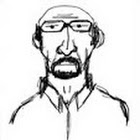
*** Wollheim, who passed away in 1990, is probably worth a posting all of his own as one of the more notable polarizing figures in the history of science fiction. Wollheim was responsible for the bootleg 1965 American publication of The Lord of the Rings - he seemed to have a bit of a predilection toward taking liberties with the work of other authors. On the other hand, DAW Books, which he started in 1971 after leaving Ace, remains a well respected and prolific publishing house.