Tuesday, February 4, 2020

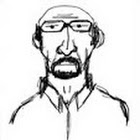
Disneyland 2020: "Who's a spy - this one?"


Video courtesy of KT

The First Order tightens its grip* on Black Spire Outpost...

- Sid

* No pun intended.

Disneyland 2020: Black Spire Outpost.


"It’s a millennium falcon!"
Stefanie T. (Karli’s sister) upon seeing a hunting bird overhead.
Although it's only been a couple of years since Karli and I visited Disneyland for her birthday, I was solidly on board when she suggested another birthday visit.  It's not just because Disneyland is the happiest place in the world - although it's certainly a factor - but rather because of Galaxy's Edge,  the new 14-acre Star Wars themed area which opened in August of 2019, and The Rise of the Resistance, a new ride which had only been live since January of this year.

This time we're accompanied by her two sisters, Lisa and Stefanie, but logistics are still simple and straightforward - in fact, we all stay at the same hotel from our last visit, full points to Westjet for consistency on their three-day Disneyland packages.*  We fly down on the Monday afternoon, settle into our rooms, and then we're off to the park bright and early on Tuesday morning.

Once into Disneyland, the consensus is to head for Galaxy's Edge, see what the lineup is like for Smugglers Run, in which you and five other guests fly the Millennium Falcon on a supply raid for the Resistance (and a little bit extra for the local smuggling cartel), and generally take a look at the new area.

As you leave Fantasyland, there's a transitional treed area, then you enter Black Spire Outpost, a small trading port on the planet Batuu, located in the Outer Rim Territories.  The space port is surrounded by towering rocky spires, although the actual black spire that it takes its name from is located within the port itself.

Each of the Disneyland areas have their own decor, but in the development of Galaxy's Edge, it was Disney's intention to create the illusion that visitors had just walked into one of the movies, and they've done a superb job.

Photo by KT
Tattered banners flutter in the wind as you enter through the main gate, where a First Order shuttle sits threateningly on a landing pad near the entrance, surrounded by a variety of shops and habitats.  As you go further into the outpost, you pass Oga's Cantina and enter the port itself, whose centrepiece is an impressively full-scale Millennium Falcon, currently refueling as it waits for its next mission.  Blast shutters protect the port's windows, and there's a constant thread of chatter from port operations audible over the loudspeakers.


To the left, stairs take you up to the bazaar, where food and goods are for sale.  There's also a landspeeder garage, a hidden lightsaber assembly workshop, and a droid construction facility.  To the north lies the concealed Resistance base, where new recruits are dispatched for training - hopefully without attracting the attention of the watchful First Order Star Destroyers.


Every inch of Galaxy's Edge has been constructed to match the look and feel of the movies and the Star Wars universe - the only exception being the EXIT signs, probably due to safety code.  The quantity and quality of the "greebly dressing", as the designers for the first Star Wars movie called the set ornamentation, is astonishing and thorough, creating an impressively immersive experience.

Even the souvenir shopping is part of the illusion: the credit card machines have been modified to match the decor, change is provided in credits and units rather than dollars and cents, and Karli's birthday button garners her several "Happy Origin Day" greetings from the staff.  It's a shame that Disney doesn't allow guests to wear full costumes, it would complete the experience for me if I were wearing Jedi robes or some similarly suitable outfit.


Later in the day, we have reservations at Oga's Cantina, where droid DJ R3X provides the entertainment, and a throng of villainous scum** scheme and plot over drinks served by wait staff whose hairdos owe a large debt to Queen Amidala - apparently she's an influencer.  For visitors seeking a less dangerous beverage experience, the classic blue milk*** is also available in the plaza.

But that's not the full extent of the Black Spire experience.  Unlike the other parts of the park, Galaxy's Edge has an actual ongoing storyline, based on the struggle between the First Order and the Resistance.  Armoured stormtroopers aggressively patrol the alleys and plazas, harassing and questioning passers-by, while Chewbacca the Wookiee is in constant movement to avoid being captured, and R2-D2 communicates with his fellow droids at the depot.


There's also an iPhone datapad app that allows you to hack into door panels, controls, and droids, and then assign the hacked hardware to either the First Order or the Resistance.  The app also scans cargo pods for possible acquisition by the local smugglers, and tracks your accomplishments, such as piloting the Millennium Falcon, assigning credits to your account that can be used to upgrade your profile with weapons and clothing.


At one point while we're exploring the outpost, an officer of the First Order demands our attention from the landing pad near the entrance, announcing that a female Resistance spy is somewhere on the outpost.  As he threatens us, Kylo Ren stalks down the landing ramp of the shuttle behind him, and Force chokes the officer to express his displeasure with the lack of results in the search for the spy, after which he enters the crowd to carry on the search himself, accompanied by a pair of stormtroopers.


At night, the experience is even better. Multi-coloured light sabers bloom in the darkness, and the visitors to the outpost achieve a kind of anonymity in the shadows, increasing the illusion.


My inner child, who is quite close to the surface in situations like this, was delighted by the entire experience.  I commented to my travelling companions that I could easily have spent the entire three days in Galaxy's Edge, and they were quite surprised.

"What would you do?"

"Well, everything!"

Disney is obviously aware of the desire for an even more immersive experience - a new luxury Star Wars hotel is under construction in the Epcot area of Walt Disney World in Florida, with an anticipated opening date in 2021.

"Hotel" is a bit of a misnomer, since the facility is intended to create the illusion that guests are spending two days on a galactic star cruiser, complete with Star Wars themed passenger cabins with viewports into space, an opportunity to operate bridge controls, interactive light saber games, and a new Star Wars storyline to provide a background for the experience.

Hmm, well, you know, Florida IS nice, and, come to think of it, the Kennedy Space Centre is only about 60 miles from Disneyworld, I'd love to go there again, and we have been discussing options for my next birthday...  On the other hand, part of me feels that I should go on my own.  As much as I love doing things with Karli, it seems a lot to ask for her to be an unpaid extra in my Star Wars movie for two days.

- Sid

* This is an unpaid endorsement, although I would be happy to be paid if someone at Westjet feels the urge.

** This seems a bit harsh - after all, they're just tourists like us.

*** I cautiously tried the chilled blue milk, and quite enjoyed it, although it's really more of a frosty than anything else. A friend of Karli's told her that lukewarm blue milk is available elsewhere in Black Spire - and that you do NOT want to drink it.

Tuesday, January 28, 2020

Wasteland.


On Monday night, my friend Chris and I went to a showing of 1917, a gripping, dramatic film which really doesn't need to rely on the additional trick of being a single extended shot (well, two shots, to be accurate, the main character is knocked out at one point in the film).  It's a timely viewing, given that I've just finished reading one of the books that I purchased during my recent Toronto trip1917 - Wasteland:  The Great War and the Origins of Modern Horror, by W. Scott Poole.

It's Poole's contention that modern horror finds its origins in the literally horrifying environment of the trench war: mud, blood, mold and decay, a hellish landscape punctuated by fetid shellholes, unburied bodies, and mutilated soldiers.

Art is always a window into its own time and place, and I certainly agree with his comments regarding the influence of the war on artistic movements such as Dada and Surrealism, and its role in the rise of fascist politics as a response to the chaos of the battlefield, but the connections he makes to the genre of early 20th Century horror don't have the same authority for me.

Historically speaking, almost all of the best known stories that lay the groundwork for horror as we know it today predate World War One:  Mary Shelley's Frankenstein revived his monster in 1818, Edgar Allan Poe wrote The Telltale Heart, The Cask of Amontillado, and The Fall of the House of Usher in the middle of the 19th century, Robert Louis Stevenson published The Strange Case of Dr. Jekyll and Mr. Hyde in 1886, and Bram Stoker's Dracula made its debut in 1897.  H. G. Wells, whose writing is admittedly considered to be more science fiction than horror, released The Island of Doctor Moreau in 1896 and The Invisible Man in 1897.

The villain of The Phantom of the Opera, written in 1909, is deformed from birth, rather than due to the misfortunes of combat.  Ambrose Bierce, noted literary creator of the odd and the uncanny, vanished in Mexico and was presumed dead in 1914,  and Howard Phillip Lovecraft, commonly cited as one of the most influential figures in the development of the horror genre, wrote his first published tale of indescribable eldritch monstrosity in June of 1917, a month before the start of the war.

The equally classic horror films of the post-war era draw heavily upon that pre-war catalogue of horror fiction, with movies such as The Phantom of the Opera, 1925; Dracula, 1931; Frankenstein, 1931; Island of Lost Souls, based on The Island of Dr. Moreau, 1932; and The Invisible Man in 1933.


However, it's Poole's contention that the success of these films, regardless of their source material, reflect a specific post-war zeitgeist:  Frankenstein's patchwork monster represents the fragmentary corpses of the trenches and craters, the Phantom's mask (and ruined visage) echo the masked faces of mutilated veterans, and the bandages seen on the Invisible Man and the Mummy are the same bandages that cocooned wounded soldiers.  Dr. Moreau's surgical theatre, the "house of pain" of the movie, reflects the harrowing, nightmarish procedures of the front line hospitals.

For me, the strength of Poole's thesis lies in extending the effects of the first world war through the rise of fascism in Europe and from there into the origins of World War II, which seems far more resonant in terms of its genre influence. In my mind, World War II, or more accurately, the events of the Holocaust, represent a more significant line of demarcation than World War I in terms of its effect on the continuity of horror to the modern day.

It’s much easier for me to connect the psychopathic physical brutality of movies like Psycho, the Halloween, Saw and Friday the 13th franchises, and a myriad of other slasher films, to the Nazi concentration camps in their shared inhuman indifference and disregard for the human body.  World War II is more commonly associated with the spectre of nuclear destruction and the effects of radiation on the world, but it also revealed a more subtle and frightening truth:  the idea that the most horrifying, cold-blooded and pitiless monsters can actually be other human beings.

- Sid

Sunday, January 26, 2020

And weighs as much as 16,788,000 Timbits.


And yes, the internet will tell you how much a Timbit weighs - because Canada.

- Sid

Thursday, January 23, 2020

"Be the captain they remember."


Though much is taken, much abides; and though
We are not now that strength which in old days
Moved earth and heaven, that which we are, we are,
One equal temper of heroic hearts,
Made weak by time and fate, but strong in will
To strive, to seek, to find, and not to yield.
 Alfred Lord Tennyson, Ulysses
From the very beginning of the first episode of Picard, it's obvious that  the series will be catering to nostalgia on the part of the Star Trek fan base, as Data and Picard play poker in Ten Forward on the Enterprise to the tune of Blue Skies, the Irving Berlin tune that Data performed at Riker and Troi's wedding in Star Trek: Nemesis - and which B4, his less sophisticated duplicate, attempts to sing at the end of the movie.


Sadly, it's only a dream, but a dream whose ending suggests disaster and chaos, as the surface of Mars erupts in explosive flames that engulf the Enterprise,  The explosion jolts Picard into awareness in his bedroom at Chateau Picard, where his dog, Number One, runs to greet his troubled master.

We then jump to Greater Boston, where a young woman celebrating a new job appointment with her boyfriend is suddenly assaulted by masked assassins, who kill him then restrain and blindfold her. Surprisingly, she is able to eliminate them all - while blindfolded - and afterwards has a vision:  the face of Jean-Luc Picard.

The music for the title sequence that follows is more thoughtful and introspective than the standard Star Trek themes that we've heard in the past, almost wistful - a motif that provides the theme for the first episode, aptly entitled Remembrance.


We are presented with a Jean-Luc Picard who is in retirement if not decline, withdrawn to self-imposed exile at the family estate in France, living a life of quiet seclusion and unexpectedly attended to by a pair of Romulans.  When pressed by one of them regarding his bad dreams, Picard comments that "The dreams are lovely, it's the waking up that I'm beginning to regret."

An unexpectedly adversarial media interview reveals that ten years earlier, while Picard was in charge of a humanitarian effort by the Federation to help evacuate Romulus before its sun became a supernova, rogue synthetics destroyed the Utopia Planetia shipyards on Mars, setting the entire planet on fire.  This disaster leads the Federation to withdraw from the rescue mission, causing Picard to resign in protest.

In a burst of temper, Picard verbally savages the interviewer and storms out of the room.

Later, as he consoles himself with a glass of wine, he is surprised by the woman from Boston, who has come to him for help after seeing his interview.


Her name is Dahj, and she is unable to explain why she has decided that he will be able to protect and help her. However, as they talk, she confesses to a sense of connection to Picard, from deep within her.


The next morning, after Picard has once again dreamed of Data, who is this time working on a painting, she has vanished from her room.  Disturbed by something in his dream, Picard visits Starfleet Archives to take a trip into his past in what is essentially a memory palace, a storeroom containing mementos such as models of the Stargazer, his first command, a Klingon bat'leth, and a banner from Captain Picard Day.  He extracts a canvas from storage, a 30 year old painting by Data entitled "Daughter".  The face in the painting is that of Dahj.

Leaving the archive, Picard is surprised to see Dahj again, who had left the chateau rather than take a chance of placing Picard in peril. Picard explains that she may in some way be connected to Data, but she is horrified by the suggestion that she may not be real. She then somehow senses that another kill squad is on its way, and although they try to escape, Dahj dies in battle with the assassins, who are revealed to be Romulans.

Picard, knocked out by the explosion that kills Dahj, awakens at home.  He has been returned there by the police, who claim that the security feeds showed him to be alone at Star Fleet headquarters. Spurred by what he sees as a failure to both himself and to Dahj, Picard is determined to solve the mystery set before him.

His first step is to visit the Daystrom Institute of Advanced Robotics in Okinawa, where he is met by by Dr. Agnes Jurati, one of the institute's researchers, with whom Picard discusses the possibility of flesh and blood androids.She explains that following the attack on Mars, synthetic life forms and AI research have been harshly restricted, but that even before then, they had only been able to produce relatively primitive artificial life forms.

However, Picard learns that Bruce Maddox, who unsuccessfully attempted to have Data disassembled in the classic Next Generation episode, The Measure of a Man, has vanished from the Institute following the ban.  Picard shows Jurati a necklace left behind by Dahj, which she recognizes as a symbol for fractal neuronic cloning: a theory of Maddox's positing that Commander Data's code, even his memories, could be recreated from a single positronic neuron.

Jurati then comments that this process would result in pairs of androids - twins.  Picard comments thoughtfully, "So there’s another..."

The episode concludes by giving us the final pieces of the puzzle with an enigmatic glimpse at the current location of Dajh's twin sister Soji on a derelict Borg cube being reclaimed by Romulans.


Remembrance is an intriguing and well written episode, as might well be expected given the involvement of Pulitzer-prize winning author Michael Chabon in the project, and I'm curious to see where the story will take us, and which of the characters from the Star Trek universe will make an appearance.  (It's already been teased that Jeri Ryan will return as Seven of Nine, which would suggest that the Borg cube will play a significant part in the story.)   It's also a pleasure to see Patrick Stewart return to the role of Jean-Luc Picard, bringing back the charm, humour, compassion, earnest conviction and strength of character that typified his portrayal of the captain.

However, it's obvious that neither Picard nor Stewart are young men any more.  As with his portrayal of Professor X in Logan, there are hints of King Lear in Stewart's performance as Picard, especially in his fit of rage during his interview, and his subsequent regret.  There's also an echo of Star Trek: Generations - it's easy to see that Picard, like James T. Kirk in that film, wants to matter again.

One has to wonder if this series is intended to mark the end of Picard's story in a similar fashion to that of the Professor, or Kirk - will Picard ultimately fail to survive his search for the solution to this mystery?

If this series is intended to present us with the last act of Captain - now Admiral* - Picard, hopefully it won't be too soon.  As Picard wistfully comments to Data in the opening sequence, he doesn't want the game to end - and neither do his fans.

- Sid

* "Retired!"

Wednesday, January 22, 2020

Geekmas 2019: And we're done here.


It's almost a month now since Christmas Day, and since then I've also received the first book in the Epic Yarns Star Wars series as an unexpected gift, bought one of the unpurchased books from my seasonal gift list at Bakka Books in Toronto, and just received a well-made NOSTROMO t-shirt and the third Epic Yarns book from Amazon™ at work today, purchased with gift cards that I received for Christmas.  So let's call it a wrap for Geekmas 2019 - no pun intended.

- Sid